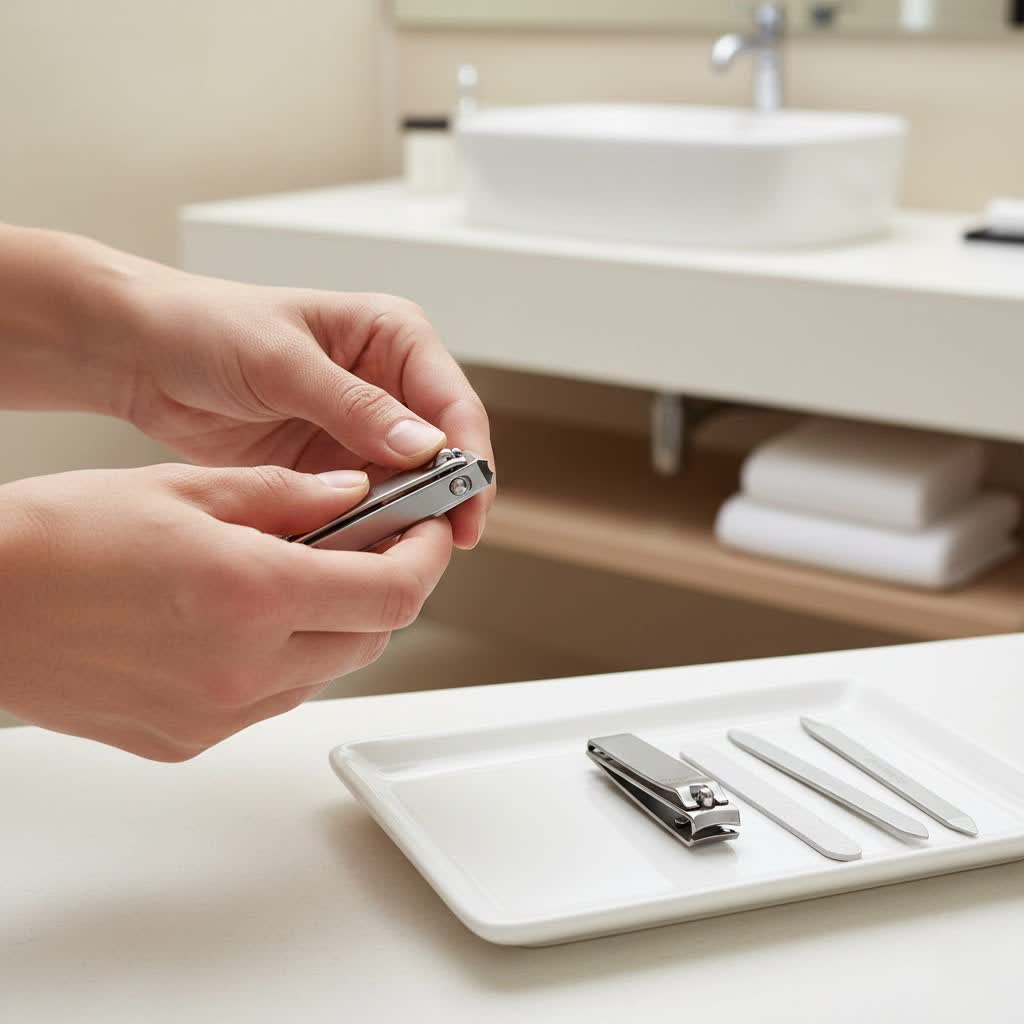
Dealing with fungal nail infections can be frustrating, especially when your nails become thick, brittle, and discolored. The struggle to trim these stubborn nails with regular clippers is real – they often prove ineffective, causing more pain or even spreading the infection. If you’ve experienced this, you know the importance of having the right tool for the job. Specialized Fungal Nail Clippers are designed to address these challenges head-on, offering precision, durability, and a safer approach to managing infected nails.
This comprehensive guide will walk you through everything you need to know about fungal nail clippers, from understanding their unique features to choosing the best ones and maintaining them for optimal hygiene. Get ready to transform your nail care routine and take a confident step towards healthier, happier feet.
Understanding Fungal Nail Clippers
Fungal nail clippers are not your average grooming tool. They are specifically engineered to tackle the unique challenges posed by fungal nail infections, which often result in thickened, hardened, or brittle nails that standard clippers simply cannot manage effectively. These specialized tools play a crucial role in managing the physical symptoms of fungal infections, enabling cleaner cuts and reducing the risk of further complications or spread.
While the concept of specialized nail trimming tools has evolved over time, modern fungal nail clippers benefit from advancements in materials and ergonomic design, making them indispensable for effective home nail care when dealing with such conditions. They are distinct from conventional clippers in their construction and capabilities.
Common Types of Fungal Nail Clippers
When it comes to managing fungal nails, not all clippers are created equal. The market offers several types, each with unique advantages tailored to different needs. Understanding these distinctions will help you select the most appropriate tool for your specific situation.
Plier-style Clippers (Nippers)
Plier-style clippers, often referred to as nail nippers, are the workhorses of fungal nail care. Their design resembles small pliers, providing significant leverage and a wider jaw opening compared to traditional clippers.
- Advantages:
- Superior Cutting Power: Excellent for cutting through very thick, tough, and brittle fungal nails without crushing them.
- Enhanced Control: The ergonomic handles often feature non-slip grips, allowing for better maneuverability and precise cuts, reducing the risk of accidental slips.
- Wide Jaw Opening: Easily accommodates the increased thickness of fungal nails.
- Durability: Typically constructed from high-grade stainless steel or surgical-grade materials, ensuring longevity and rust resistance.
- Disadvantages:
- Sharpness Requires Caution: The powerful, sharp blades demand careful handling to prevent injury, especially for individuals with reduced sensation or dexterity.
- Bulkier: Can be larger and heavier than other types, potentially less convenient for travel.
- Usage: Ideal for severe fungal infections, ingrown nails, or extremely thick toenails. They are often recommended for general toenail care due to their effectiveness.
|
Our Picks for the Best Nail Clippers in 2026
We may earn a commission when you use one of our links to make a purchase.
|
||
| Num | Product | Action |
|---|---|---|
| 1 | Ultra Sharp Nail Clippers Set - 2 Pack Stainless Steel Fingernail & Toenail Trimmers with Built-in Nail File for Women & Seniors (Silver) |

|
| 2 | 2026 Upgraded 3-in-1 Electric Nail Clipper,Rechargeable Electric Nail File & Toenails, 6 Speeds with LED Light & Nail Debris Storage,Suitable for Children,Adults,Seniors to use Electric Nail Trimmer |
|
| 3 | Toenail Clippers for Seniors Thick Toenails, Aucurwen Heavy Duty Toe Nail Clippers Adult Thick Nails Long Handle, Large Toenail Clippers for Thick Nails 7Pcs |
|
| 4 | 4-in-1 Electric Nail Clipper with LED Light – Quiet Rechargeable Nail Grooming Kit, Grinder & Polisher, 2 Speed, Nail Debris Collector, Portable Gift Set |
|
| 5 | Toenail Clippers for Thick Toenails for Seniors, Angled Head Large Toe Nail Clippers for Thick Nails for Men, Heavy Duty Ingrown Toenail Clippers with Wide Jaw, Sharp Slanted Nail Cutter Black |
|
| 6 | Upgraded Toenail Clippers for Thick Toenails for Seniors, Angled Head Large Toe Nail Clippers Set for Men, Heavy Duty Ingrown Toenail Clippers Long Handled, Ultra Sharp Slanted Nail Cutter Wide Jaw |
|
| 7 | HAWATOUR Nail Clippers Set, Ultra Sharp Sturdy Fingernail and Toenail Clipper Cutters with Visibly Tin Case, Black |
|
| 8 | HAWATOUR Nail Clippers Set, Ultra Sharp Sturdy Fingernail and Toenail Clipper Cutters with Visibly Tin Case, Silver |
|
| 9 | Nail Clipper Set,Premium Stainless Steel Fingernail and Toenail Clipper Cutters with Nail File, Sharp Effortless Nail Clippers Set for Men & Women(Silver) |
|
| 10 | SZQHT Ultra Wide Jaw Opening Nail Clippers Set, Toenail Clippers for Thick Nails, Heavy Duty Nail Cutter, Stainless Steel Toe Nail Clippers for Seniors, Men & Women Manicure,Pedicure,Big(Black) |
|
Scissor-style Clippers
While less common for severely thickened fungal nails, some scissor-style clippers are designed with robust blades that can be effective for moderately tough nails or for precise trimming around the edges.
- Advantages:
- Precision: Can offer very fine control for intricate cuts, especially useful for shaping or trimming delicate areas.
- Maneuverability: Their design allows for a good range of motion, which can be helpful for certain angles.
- Disadvantages:
- Less Leverage: May struggle with extremely thick or hard nails, requiring more effort from the user.
- Blade Alignment: Can sometimes be less robust than plier-style blades, potentially dulling faster if used on very hard surfaces.
- Usage: Best for milder cases of nail thickening, for finishing touches, or for individuals who prefer the scissor grip.
Specialty Clippers
Beyond the primary types, specific clippers cater to particular needs associated with fungal infections or nail conditions.
- For Very Thick Nails: These often feature extra-wide jaw openings (some over 1 inch) and enhanced leverage mechanisms, sometimes with double-spring actions to minimize effort. They are designed for the most stubborn nails.
- For Ingrown Nails: While often overlapping with plier-style clippers, ingrown nail clippers may have more pointed or angled tips to access tight corners and lift ingrown sections carefully. Straight blades are often preferred to prevent further ingrowth.
- For Diabetics/Seniors: Clippers designed for these groups prioritize safety, ergonomic handles for reduced strain, and sharp, precise blades to prevent jagged edges that could lead to injury. However, professional nail care is often recommended for diabetics due to the increased risk of complications from self-trimming.
Comparing Fungal Nail Clippers
Choosing the right tool involves evaluating several factors. Here’s a comparison to help you weigh your options:
| Feature | Plier-style Clippers (Nippers) | Scissor-style Clippers | Specialty Clippers (e.g., for very thick/ingrown) |
|---|---|---|---|
| Material | High-grade Stainless Steel, Surgical-grade Steel | Stainless Steel | High-grade Stainless Steel, Surgical-grade Steel |
| Durability | Very High (Heavy-duty construction) | Moderate to High | Very High (Reinforced for tough jobs) |
| Sharpness | Excellent (Clean, precise cuts) | Good (Fine precision) | Excellent (Often with sharper, specialized edges) |
| Design | Ergonomic, spring-loaded, wide jaw, long handle | Often more compact, traditional scissor grip | Extra-wide jaw, advanced leverage, sometimes angled tips |
| Price Range | Mid to High | Low to Mid | Mid to High |
| Target User | Thick, fungal, ingrown nails; general toenail care | Milder thickening, shaping, personal preference | Extremely thick, severely ingrown, or problematic nails |
How to Choose Fungal Nail Clippers (Buying Guide)
Selecting the right fungal nail clippers is paramount for effective, safe, and comfortable nail care. Consider these factors to make an informed decision:
Key Factors to Consider When Choosing Fungal Nail Clippers:
-
Material (Stainless Steel, Carbon Steel, etc.):
- High-grade Stainless Steel: This is the gold standard. It offers excellent resistance to rust and corrosion, is durable, and maintains a sharp edge. Surgical-grade stainless steel provides even higher quality and resistance to pathogens.
- Carbon Steel: Can be made incredibly sharp, ideal for cutting through extremely tough nails with ease. However, carbon steel is more prone to rust and requires meticulous cleaning and oiling to prevent corrosion.
- Avoid: Clippers made from cheaper, inferior metals that dull quickly or rust easily, as these can cause damage and harbor bacteria.
-
Blade Sharpness and Durability:
- Sharp blades are crucial for a clean cut. Dull blades can crush, tear, or split the nail, leading to pain, further damage, and potential infections.
- Look for precision-ground edges that retain their sharpness over time, especially with repeated use on hard nails.
-
Design and Size (Ergonomics, Jaw Opening):
- Wide Jaw Opening: Essential for accommodating the increased thickness of fungal nails. A jaw opening of at least 15mm is often recommended.
- Ergonomic Handle: A comfortable, non-slip grip (often rubber or silicone) provides better control and reduces hand fatigue, particularly important for those with arthritis or limited hand strength.
- Leverage: Designs that offer good leverage, such as spring-loaded mechanisms or barrel springs, make cutting thick nails easier and require less effort.
- Blade Shape: Straight blades are generally preferred for toenails, especially to prevent ingrown nails, as they allow for a straight cut across the nail. While some prefer curved blades for a natural look, for fungal and thick nails, straight is safer.
-
Reputable Brands:
- Investing in clippers from well-known brands often guarantees higher quality, better materials, and superior craftsmanship. While specific brand names are not included in the final output, seeking out brands with positive reviews and a focus on podiatry-grade tools is a wise approach.
-
Price:
- Quality fungal nail clippers are an investment. While you don’t need the most expensive option, be wary of overly cheap tools, as they may compromise on material quality, sharpness, and durability, potentially leading to a frustrating and unsafe experience.
Where to Buy Fungal Nail Clippers?
You can find quality fungal nail clippers at various retailers:
- Specialty Medical Supply Stores: These stores often carry professional-grade podiatry tools.
- Online Retailers: Websites offer a wide selection with customer reviews that can help guide your purchase.
- Pharmacies/Drugstores: Larger pharmacies might stock heavy-duty toenail clippers, but ensure they meet the criteria for thickness and sharpness.
How to Maintain Fungal Nail Clippers to Increase Longevity:
Proper maintenance is critical, especially when dealing with fungal nails, to prevent the spread of infection and ensure the tool’s longevity.
- Clean After Every Use: Immediately after trimming, remove any visible nail debris.
- Sanitize/Disinfect:
- Wash with warm, soapy water, scrubbing with a small brush to remove any lingering particles.
- Soak the clippers in 70-90% isopropyl alcohol, hydrogen peroxide, or a hospital-grade disinfectant for at least 5-10 minutes (or as per product instructions). Some experts suggest soaking in white distilled vinegar and water for 10 minutes to help kill fungal spores.
- For sturdy metal tools, boiling them in water for 10 minutes can also sanitize effectively.
- Dry Thoroughly: Always dry your clippers completely with a clean towel or air dry them to prevent rust, especially for carbon steel tools.
- Store Properly: Store your clippers in a clean, dry place, preferably in a protective pouch or case, to keep them free from dust and moisture.
- Dedicated Use: Ideally, use separate clippers for healthy nails and fungal nails to prevent cross-contamination.
Top Picks: Best Fungal Nail Clippers Reviewed
When selecting clippers for fungal or thick nails, certain features consistently stand out as beneficial. While specific product names are not the focus, here’s a breakdown of what makes top-performing clippers excel:
- The Heavy-Duty Podiatrist-Style Clipper: These often feature a large, wide jaw opening (e.g., up to 15mm or more) and an ergonomic, textured handle for maximum grip and control. Their robust, surgical-grade stainless steel blades are incredibly sharp and durable, designed to effortlessly slice through even the toughest, most irregular nails. The double-spring mechanism provides superior leverage, making trimming less strenuous. Many users praise their ability to make clean, precise cuts without causing pain or splitting the nail.
- The Ergonomic Precision Nipper: Distinguished by its comfortable, non-slip handles and a slightly curved, precision-ground blade that can be maneuvered to make straight cuts. Made from high-quality stainless steel, this type is praised for its balance of sharpness and user-friendliness. It’s often compact enough for easy handling but powerful enough for thick nails, offering excellent control for preventing ingrown issues.
- The Wide-Jaw, Rotating Head Clipper: An innovative design that combines a generous jaw opening with a 360-degree rotating head. This feature is particularly beneficial for individuals with limited mobility or flexibility, allowing them to adjust the clipping angle without awkward wrist contortions. Constructed from durable stainless steel, it offers sharp blades and an easy-grip handle, making it a versatile choice for various nail conditions, including thick and fungal nails.
- The Professional-Grade Ingrown Nail Clipper: While excellent for general thick nails, these clippers often have a finer, slightly angled tip to precisely target and trim ingrown sections. They maintain the heavy-duty stainless steel construction and ergonomic handles of other top picks, prioritizing accuracy and minimizing discomfort when addressing problematic corners of the nail. Their sharpness is paramount for clean removal of ingrown portions without tearing.
> “The right clippers make all the difference for fungal nails. Look for surgical-grade steel and a design that prioritizes both power and control to ensure a safe and effective trim.” – Dr. Emily R., Podiatrist
Conclusion
Navigating the challenges of fungal nail infections and thickened nails requires more than just patience; it demands the right tools. Fungal nail clippers are an essential part of an effective nail care regimen, offering the sharpness, durability, and ergonomic design needed to safely and efficiently manage affected nails. By understanding the different types, carefully considering key features like material and jaw opening, and committing to proper maintenance, you empower yourself to achieve healthier, more comfortable nails.
Remember, investing in high-quality fungal nail clippers isn’t just about trimming nails—it’s about promoting overall foot health and preventing further complications. What steps will you take today to upgrade your nail care toolkit for healthier nails tomorrow?
Frequently Asked Questions
Are special clippers really necessary for fungal nails?
Yes, special clippers are highly recommended for fungal nails. Fungal infections often cause nails to become thick, hard, and brittle, which standard clippers struggle to cut cleanly. Specialized fungal nail clippers feature sharper blades, wider jaw openings, and better leverage to handle these tough nails effectively and safely, preventing further damage or the spread of infection.
How often should I clean my fungal nail clippers?
You should clean and disinfect your fungal nail clippers immediately after every single use. This practice is crucial to prevent the spread of fungal spores and bacteria, both on the tool itself and to other nails. Regular cleaning also helps maintain the clippers’ sharpness and extends their lifespan.
Can I use my fungal nail clippers on healthy nails?
It is strongly advised to use separate clippers for healthy nails and fungal nails to prevent cross-contamination. If you must use the same clippers, ensure they are thoroughly cleaned, disinfected, and sterilized between uses to eliminate any fungal spores or bacteria before touching a healthy nail.
What’s the best way to disinfect fungal nail clippers at home?
The most effective home disinfection method involves first washing the clippers with warm, soapy water to remove debris. Then, soak them in 70-90% isopropyl alcohol, hydrogen peroxide, or a household disinfectant known to kill fungi for 5-30 minutes. Ensure the clippers are completely dry before storing to prevent rust.
What type of blade is best for thick fungal toenails?
For thick fungal toenails, a straight or slightly curved but wide blade that allows for a straight cut is generally preferred. This design helps prevent ingrown toenails, which can be a common complication with fungal infections. The blades should be made of high-grade stainless steel for optimal sharpness and durability.